

The Future of Decentralized Finance: How Blockchain Technology is Revolutionizing Global Banking Systems in 2025

The future of decentralized finance powered by blockchain technology
The financial services industry stands at the precipice of its most significant transformation since the introduction of electronic banking in the 1960s. Decentralized Finance, commonly known as DeFi, represents not merely an incremental improvement to existing financial infrastructure but a fundamental reimagining of how money, assets, and value exchange hands in the digital age. As we navigate through 2025, the convergence of blockchain technology, artificial intelligence, and traditional finance is creating opportunities and challenges that will define the next generation of global economic systems.
Understanding the DeFi Revolution: Beyond the Buzzwords
Decentralized Finance refers to a blockchain-based form of finance that does not rely on central financial intermediaries such as brokerages, exchanges, or banks to offer traditional financial instruments. Instead, it utilizes smart contracts on blockchains, most commonly Ethereum, Solana, and emerging layer-2 solutions. The fundamental promise of DeFi is democratization – providing access to financial services to anyone with an internet connection, regardless of their geographical location, credit history, or socioeconomic status.
The evolution of DeFi has been nothing short of remarkable. What began as a niche experiment among cryptocurrency enthusiasts has blossomed into a multi-trillion-dollar ecosystem encompassing lending protocols, decentralized exchanges, synthetic assets, insurance products, and complex financial derivatives. The total value locked in DeFi protocols has experienced exponential growth, weathering market volatility and regulatory uncertainty to emerge as a legitimate alternative to traditional financial services.
The Technology Powering the Financial Revolution

Smart contracts and blockchain infrastructure powering DeFi
At the heart of DeFi lies blockchain technology – a distributed ledger system that records transactions across multiple computers in a way that makes it nearly impossible to alter retroactively. This technological foundation provides several critical advantages over traditional centralized systems: transparency, immutability, programmability, and disintermediation.
Smart contracts serve as the building blocks of DeFi applications. These self-executing contracts with the terms of the agreement directly written into code eliminate the need for intermediaries, reducing costs and execution time while increasing transparency. When specific conditions are met, smart contracts automatically execute predetermined actions, ensuring trustless and reliable transactions without human intervention.
Key Blockchain Advantages:
- Transparency: All transactions are visible on the public ledger
- Immutability: Records cannot be altered after confirmation
- Programmability: Smart contracts automate complex operations
- Disintermediation: Eliminates need for central authorities
- 24/7 Operation: No business hours or geographical restrictions
Traditional Banking vs. DeFi: A Comprehensive Comparison
Traditional banking systems have served humanity for centuries, evolving from simple deposit-taking institutions to complex financial conglomerates offering a wide array of services. However, these systems carry inherent limitations that DeFi aims to address. Traditional banks operate during specific hours, require extensive documentation for account opening, charge significant fees for international transfers, and maintain control over customers' funds.
DeFi platforms operate 24/7/365, with no geographical restrictions or business hours. Users maintain custody of their assets through private keys, eliminating counterparty risk associated with traditional banking. Transaction fees in DeFi, while variable based on network congestion, often prove substantially lower than traditional wire transfer fees, especially for international transactions. The transparency of blockchain technology allows users to verify all transactions and audit smart contract code, providing unprecedented visibility into financial operations.
Banking Comparison:
| Feature | Traditional Banking | DeFi |
|---|---|---|
| Operating Hours | Business hours only | 24/7/365 |
| Asset Custody | Bank controlled | User controlled |
| Transparency | Limited | Complete |
| International Transfers | 3-5 days, high fees | Minutes, lower fees |
Key DeFi Protocols Reshaping Finance
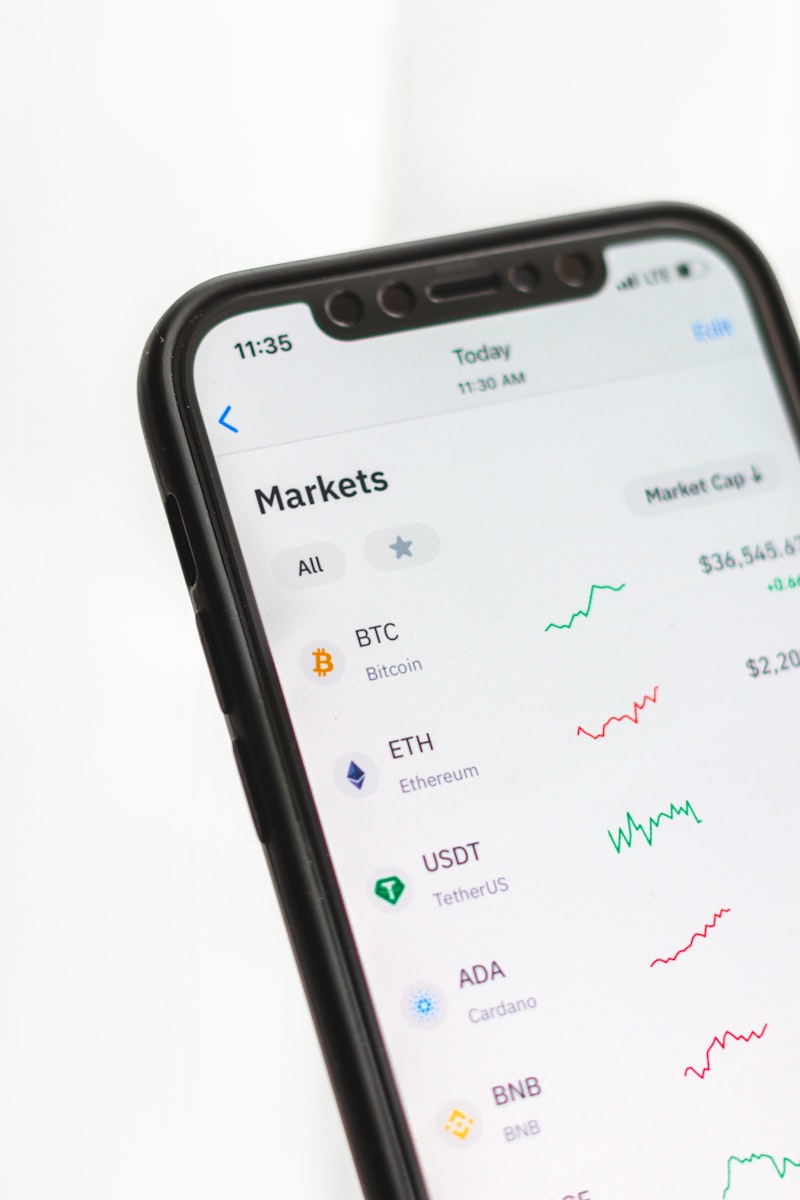
Major DeFi protocols transforming financial services
The DeFi ecosystem comprises numerous protocols, each serving specific financial functions. Understanding these core components is essential for anyone looking to participate in or understand this emerging sector.
Lending and Borrowing Platforms
Lending and borrowing platforms have emerged as the cornerstone of DeFi. Protocols like Aave, Compound, and Maker allow users to lend their cryptocurrency assets to earn interest or borrow against their holdings without credit checks. These platforms use algorithmic interest rates that adjust based on supply and demand, creating more efficient capital markets. Borrowers can access liquidity without selling their assets, while lenders earn yields that often exceed traditional savings accounts.
Decentralized Exchanges (DEXs)
Decentralized Exchanges facilitate peer-to-peer trading without centralized intermediaries. Uniswap, SushiSwap, and Curve Finance use automated market maker (AMM) algorithms to enable instant token swaps. These platforms have processed hundreds of billions in trading volume, offering benefits like reduced counterparty risk, no KYC requirements, and permissionless listing of new tokens. Liquidity providers earn fees by depositing token pairs into liquidity pools, creating a new income stream for cryptocurrency holders.
Yield Farming and Liquidity Mining
Yield Farming and Liquidity Mining represent innovative mechanisms for capital deployment. Users provide liquidity to various DeFi protocols in exchange for rewards, often paid in the platform's native governance tokens. While potentially lucrative, yield farming carries significant risks including impermanent loss, smart contract vulnerabilities, and extreme market volatility. Sophisticated investors use complex strategies involving multiple protocols to maximize returns while managing risk exposure.
Investment Opportunities in the DeFi Space
Investment Entry Points:
- Direct Protocol Participation: Lending, borrowing, liquidity provision
- Governance Token Investment: UNI, AAVE, COMP tokens
- DeFi ETFs/Funds: Regulated investment vehicles
- Yield Farming Strategies: Active management for higher returns
- Liquidity Pool Tokens: LP tokens representing pool shares
For investors seeking exposure to DeFi, multiple entry points exist, each with distinct risk-reward profiles. Direct participation involves purchasing cryptocurrency and interacting with DeFi protocols to lend, borrow, provide liquidity, or yield farm. This approach offers the highest potential returns but requires technical knowledge, active management, and tolerance for significant volatility.

Diverse investment opportunities in the DeFi ecosystem
Regulatory Landscape and Compliance Challenges
The regulatory environment surrounding DeFi represents one of the sector's greatest uncertainties and opportunities. Regulators worldwide are grappling with how to apply existing financial regulations to decentralized systems that operate without central control or identifiable operators. The regulatory approach varies significantly across jurisdictions, creating a complex patchwork of rules and requirements.
In the United States, multiple regulatory agencies claim jurisdiction over different aspects of DeFi. The Securities and Exchange Commission (SEC) argues that many DeFi tokens constitute securities and should be registered accordingly. The Commodity Futures Trading Commission (CFTC) asserts authority over cryptocurrency derivatives. The Financial Crimes Enforcement Network (FinCEN) focuses on anti-money laundering compliance. This regulatory uncertainty has led some DeFi projects to implement KYC procedures, while others remain completely permissionless.
Central Bank Digital Currencies: Competition or Complement?
Central Bank Digital Currencies emerging alongside DeFi
Central Bank Digital Currencies (CBDCs) represent governments' response to the cryptocurrency revolution. Unlike decentralized cryptocurrencies, CBDCs are issued and controlled by central banks, combining digital efficiency with traditional monetary policy control. Over 90% of central banks worldwide are exploring or developing CBDCs, recognizing the need to modernize payment infrastructure and maintain monetary sovereignty in an increasingly digital world.
China's digital yuan leads CBDC development, with extensive pilot programs testing retail and wholesale applications. The European Central Bank's digital euro project advances steadily, with implementation expected within several years. The Federal Reserve explores a digital dollar, though political and technical challenges slow progress.
The Institutional Adoption Wave
Institutional adoption of DeFi and broader cryptocurrency markets has accelerated dramatically. What began as retail speculation has evolved into serious institutional investment, with hedge funds, family offices, and traditional financial institutions allocating significant capital to digital assets and DeFi protocols.
Major financial institutions now offer cryptocurrency services to clients. Goldman Sachs, JPMorgan, and Morgan Stanley provide cryptocurrency trading, custody, and investment products. Banks recognize that ignoring digital assets risks losing relevance as younger generations increasingly embrace cryptocurrency.
Institutional Developments:
- Bank Services: Goldman Sachs, JPMorgan offering crypto products
- Custody Solutions: Fireblocks, Anchorage, BitGo for institutions
- Asset Tokenization: Real estate, bonds, private equity on blockchain
- Institutional Lending: Cryptocurrency-collateralized loans
- DeFi Integration: Traditional finance adopting DeFi protocols
Security Considerations and Risk Management

Security remains paramount in DeFi participation
Security in DeFi requires a fundamentally different mindset than traditional finance. Users bear full responsibility for asset security, eliminating protections like FDIC insurance or credit card chargebacks. Understanding security best practices becomes essential for anyone participating in DeFi.
Wallet security forms the foundation of DeFi safety. Hardware wallets like Ledger and Trezor provide the highest security by keeping private keys offline. Software wallets offer convenience but require careful management to prevent hacking. The emergence of smart contract wallets with social recovery features provides a middle ground, balancing security with usability.
Smart contract risks represent unique DeFi vulnerabilities. Even audited contracts may contain bugs or unforeseen interactions with other protocols. Investors should understand basic smart contract mechanics, review audit reports, and limit exposure to newly launched protocols.
The Future: Predictions and Emerging Trends
The DeFi landscape continues evolving rapidly, with several key trends shaping its future trajectory. Understanding these developments provides insight into where opportunities and challenges may emerge.
Emerging Trends:
- Cross-Chain Interoperability: Seamless asset transfers between blockchains
- AI Integration: Machine learning for trading and risk management
- Real-World Assets: Tokenization of traditional assets
- Privacy Enhancements: Zero-knowledge proofs for confidential transactions
- User Experience: Simplified interfaces for mainstream adoption

The future of finance: blockchain meets artificial intelligence
Conclusion: Embracing the Financial Future
The DeFi revolution represents more than technological innovation; it embodies a fundamental rethinking of financial systems' purpose and structure. As blockchain technology matures and regulatory frameworks develop, DeFi will increasingly integrate with traditional finance, creating hybrid systems combining the best of both worlds.
For investors and financial professionals, understanding DeFi becomes essential. Whether participating directly in protocols, investing in DeFi tokens, or simply understanding how these systems may disrupt traditional banking, knowledge of decentralized finance proves increasingly valuable.
The path forward involves challenges: regulatory uncertainty, security vulnerabilities, scalability limitations, and user experience hurdles. However, the potential benefits – financial inclusion, capital efficiency, transparency, and innovation – make DeFi's continued development inevitable.
Those who take time to understand these systems, who thoughtfully manage risks while embracing innovation, will find themselves well-positioned for the financial future taking shape before our eyes. The decentralized financial revolution has begun, and its implications will reverberate throughout the global economy for decades to come.
The question is no longer whether DeFi will transform finance, but how quickly this transformation will occur and how traditional institutions will adapt. Those who recognize this shift and position themselves accordingly stand to benefit immensely from the greatest financial innovation of the 21st century.